Funded by: European Union – Asylum, Migration and Integration Fund (AMIF-2020-AG-CALL-03)
Partner organisations:
Universitat Autònoma de Barcelona (UAB) · Ajuntament de Ripollet · plus partners in Belgium, Greece, Latvia, Netherlands, UK
🔍 About the project
MILE was a two-year European project (2022-2023) that empowered local communities — including migrant and refugee groups — by strengthening mechanisms for participation and inclusive policymaking at municipal level. It brought municipalities, migrant-led organisations and research teams together across six countries to co-create tools and networks for deeper social, economic and political inclusion.
🎯 Main objectives
- To achieve a better understanding of the needs of municipalities and migrant/refugee communities in their local contexts.
- To boost the political participation and leadership of migrants and refugees.
- To promote inclusive policy-making in municipalities.
- To transform practical experiences into recommendations for better integration policies.
- To establish long-term networks of exchange and collaboration for municipalities and migrant-led organisations.
🧠 Kudwa’s role
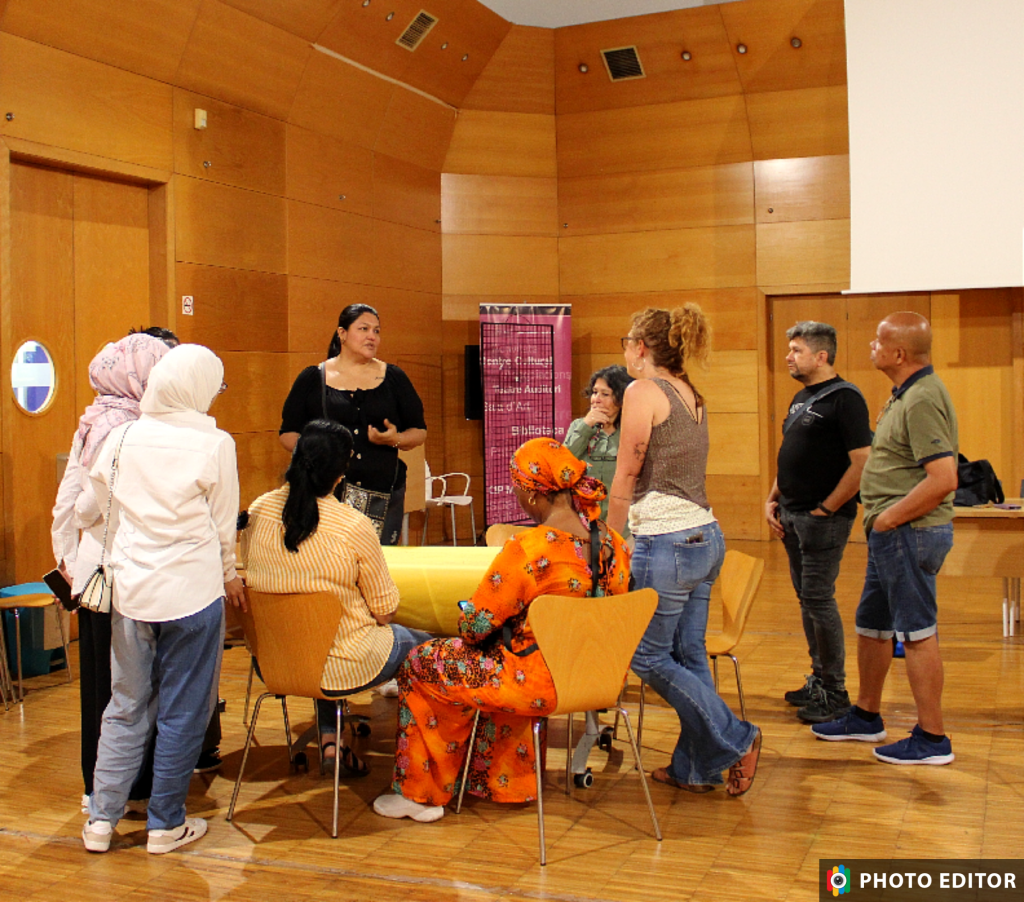
As a Spanish partner organisation, Asociación Kudwa collaborated with UAB and the municipality of Ripollet to map the state of migrant political participation, inform migrant communities about rights and participation, and support the design and creation of a consultative body of migrants incorporated into local integration policymakers’ processes.
🌍 Activities & Highlights
- Implementation of training sessions and leadership development for both migrant-led organisations and municipal staff.
- Co-creation workshops and establishment of participatory consultative mechanisms in partner municipalities (including Ripollet, Spain) that connected migrants/refugees with local decision-making.
- Support the production of research reports, policy briefs and tailored tools designed for local contexts to support inclusive governance and participation.
🌍 Impact
The project strengthened the voice and leadership of migrants and refugee communities in local governance, enhanced inclusive policymaking in partner municipalities, and generated replicable frameworks and tools for other cities across Europe.